Understanding Maternal Behavior in Monkeys: Challenges Faced by Newborns in the Wild
Motherhood in the animal kingdom is a fascinating and complex process, especially among primates. Monkeys, like humans, exhibit a wide range of maternal behaviors that include nurturing, protection, and social bonding. However, there are instances where mother monkeys may display aggression or neglect toward their newborns, which can be distressing to witness. Understanding the reasons behind such behaviors requires a deep dive into primate psychology, environmental factors, and survival instincts.
Maternal Instincts and Care in Monkeys
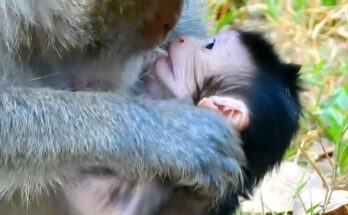
Most mother monkeys display strong maternal instincts, ensuring their infants receive warmth, nourishment, and protection. From birth, baby monkeys are dependent on their mothers for food, guidance, and social learning. The bond between a mother and her offspring is crucial for the infant’s survival, with behaviors such as carrying, grooming, and nursing being essential parts of early development. In many primate species, older females, including grandmothers and other troop members, may assist in caring for infants, a practice known as alloparenting.
Why Do Some Mother Monkeys Show Aggression or Neglect?
While the maternal bond is generally strong, there are occasions where a mother monkey may behave aggressively or even neglect her newborn. Several factors can contribute to such distressing behaviors:
- Lack of Experience (First-Time Mothers)
Younger, first-time monkey mothers may struggle with parenting instincts. Without prior experience, they may mishandle their babies or fail to provide adequate care, leading to unintentional harm or neglect. - Environmental Stress and Resource Scarcity
In the wild, resources such as food and shelter play a critical role in maternal behavior. If a mother monkey perceives a lack of resources, she might struggle to provide for her infant, leading to rejection or aggression as a survival mechanism. - Health Issues in the Infant
In some cases, a mother may abandon or reject a baby that is sick, weak, or deformed. This seemingly harsh behavior is an instinctual response that allows the mother to invest her energy in offspring that have a higher chance of survival. - Social Hierarchy and Group Dynamics
In species like macaques and baboons, social rank plays a significant role in maternal care. High-ranking females often receive support from the group, while lower-ranking mothers may face challenges such as harassment or even infant snatching by dominant members, leading to stress-induced neglect. - Human Disturbance and Habitat Loss
The destruction of natural habitats, human interaction, and captivity stress can also contribute to maternal distress, affecting the way monkeys care for their young. In some cases, human interference can disrupt natural parenting behaviors, leading to unnatural aggression or rejection.
How Do Wildlife Experts and Conservationists Help?
Researchers and wildlife conservationists study primate behavior to understand and mitigate these challenges. In rescue centers and sanctuaries, orphaned or rejected baby monkeys are often cared for by human caregivers or surrogate monkey mothers to ensure their survival. Conservation efforts focus on preserving natural habitats, minimizing human interference, and educating the public on ethical wildlife interactions.
Final Thoughts
While it can be heartbreaking to witness a newborn monkey in distress, it is essential to understand that these behaviors, though difficult to accept, are part of nature’s intricate balance. Researchers continue to study primate behavior to provide insights into improving conservation efforts and ensuring the well-being of wild and captive monkey populations. Education, empathy, and responsible wildlife interactions are crucial in helping these incredible animals thrive in their natural environments.